


How Much Can a Car Trailer Carry in Real-World Semi Trailer Operations?
April 17, 2026
How much can a car trailer carry depends on the trailer type, axle configuration, structural design, and legal weight limits in each region. In practical semi-trailer applications, a standard car trailer typically carries between 1,500 kg to over 30,000 kg depending on whether it is a light-duty utility trailer, a multi-axle car carrier, or a heavy-duty semi trailer designed for commercial logistics. For B2B operators, the real answer is not a single number but a system-based capacity determined by engineering design, axle load distribution, braking system performance, and regulatory compliance.
In real logistics operations, understanding “how much can a car trailer carry” is essential for fleet planning, cost control, and transport safety, especially in automotive distribution, construction logistics, and export shipping industries.
Trailer Types and Structural Load Capacity Differences
The carrying capacity of a car trailer is primarily determined by its structural category. Different trailer types are engineered for different operational loads, and misunderstanding this often leads to inefficiency or regulatory violations.
Light-Duty Car Trailers
Light-duty trailers are commonly used for personal transport or small-scale commercial delivery. Their payload capacity typically ranges from 1,500 kg to 3,500 kg. These trailers usually have a single axle or tandem axle configuration.
Heavy-Duty Semi Trailer Systems
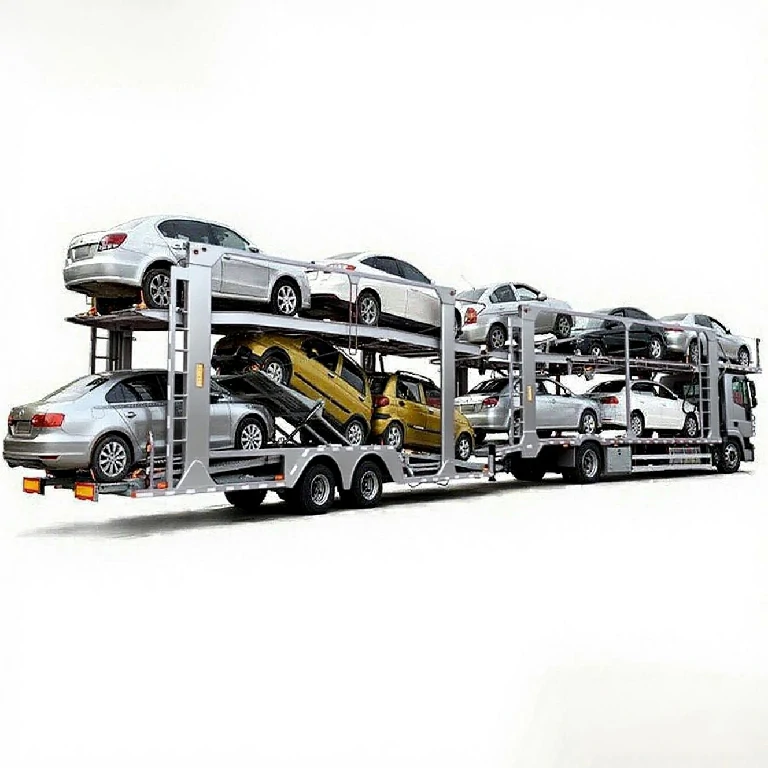
Heavy-duty semi trailers are designed for industrial logistics and can carry significantly higher loads. In automotive transport, specialized multi-level systems such as a car carrier semi trailer can carry between 6 to 12 passenger vehicles depending on size and configuration.
Flatbed and Custom Transport Trailers
Flatbed trailers are used for irregular cargo and machinery transport. Their capacity can exceed 20,000 kg depending on axle configuration and chassis reinforcement.
Key Engineering Factors That Determine Trailer Load Capacity
Understanding how much a car trailer can carry requires analyzing engineering components that define structural strength and operational safety.
Axle Configuration and Load Distribution
The number of axles directly affects load capacity. A single axle supports less weight compared to tandem or tri-axle systems. Load distribution ensures that no single axle exceeds legal weight limits.
Frame Strength and Material Design
High-strength steel frames are used in modern semi trailers to improve load-bearing performance. Reinforced cross members and longitudinal beams ensure structural stability under heavy loads.
Suspension and Brake System Efficiency
Air suspension systems are commonly used in commercial trailers to improve load stability and reduce road impact. Advanced braking systems are also essential for controlling heavy loads safely.
Legal Weight Limits and Road Regulations
Even if a trailer is structurally capable of carrying heavy loads, legal restrictions often define the actual operational limit.
Different countries enforce different gross vehicle weight ratings (GVWR), which include trailer weight plus cargo weight. Exceeding these limits can result in fines, operational bans, or safety hazards.
Example Regulatory Impact
In many regions:
- Light commercial trailers: limited to ~3.5 tons
- Medium semi trailers: 10–20 tons
- Heavy industrial trailers: up to 40+ tons depending on axle configuration
Operators must always align engineering capacity with legal compliance.
Real-World Applications in Automotive and Logistics Industries
Car trailers are widely used in automotive logistics, construction material transport, and export shipping industries.
Automotive Distribution Example
A logistics company transporting vehicles from a manufacturing plant to dealerships may use a multi-level trailer system. These systems maximize transport efficiency by carrying multiple vehicles per trip, significantly reducing logistics cost per unit.
Construction and Industrial Transport Example
Heavy equipment transport requires reinforced trailers capable of carrying machinery such as excavators or industrial generators, often exceeding 20 tons per load.
These operational scenarios demonstrate that “how much can a car trailer carry” is highly dependent on application context rather than a fixed number.
Cost Efficiency and Load Optimization Strategy
Maximizing trailer load capacity is not only a technical issue but also a cost optimization strategy. Higher load efficiency reduces fuel consumption per unit cargo and improves logistics profitability.
Fleet operators often analyze:
- Cost per kilometer per ton
- Load utilization rate
- Return trip efficiency
- Maintenance cost per axle
A well-optimized fleet reduces empty runs and increases revenue per vehicle.
Maintenance Impact on Load Performance
Regular maintenance plays a critical role in ensuring that trailers operate at designed load capacity safely.
Key maintenance areas include:
- Axle inspection and lubrication
- Brake system calibration
- Tire pressure monitoring
- Frame fatigue analysis
Ignoring maintenance can significantly reduce safe carrying capacity over time, even if the trailer is structurally capable of higher loads.
Engineering Trends in Modern Semi Trailer Design
Modern trailer engineering focuses on lightweight materials, aerodynamic efficiency, and intelligent monitoring systems.
Digital load monitoring systems are increasingly used to track real-time weight distribution, helping operators avoid overloading and improve safety compliance.
Advanced manufacturers in the semi trailer supplier industry are also integrating modular designs that allow flexible configuration depending on cargo requirements.
Load Capacity Comparison Table
Below is a simplified comparison of different trailer types and their typical carrying capacity:
| Trailer Type | Typical Payload Capacity | Main Application |
|---|---|---|
| Light-Duty Car Trailer | 1,500 – 3,500 kg | Personal transport, small cargo delivery |
| Standard Utility Trailer | 3,500 – 10,000 kg | Commercial logistics, equipment transport |
| Multi-Axle Semi Trailer | 10,000 – 30,000 kg | Industrial freight, construction materials |
| Car Carrier Semi Trailer | 6–12 vehicles (approx. 15,000 – 25,000 kg) | Automotive distribution |
Operational Safety and Overload Risks
Overloading is one of the most common causes of trailer failure and road accidents. Excess weight affects braking distance, tire wear, and structural fatigue.
Key Risks Include:
- Increased stopping distance
- Tire blowouts under heat stress
- Axle deformation
- Frame fatigue and cracking
Proper load calculation and distribution are essential for safe operations.
CTA
For customized trailer solutions and professional guidance on fleet optimization, contact our engineering team to design a safe and efficient transport system tailored to your logistics needs:
https://www.fuyuanvehicle.com/contact-us/
Frequently Asked Questions (FAQ)
1. How much can a car trailer carry on average?
It depends on the trailer type, but most range from 1,500 kg to over 30,000 kg in industrial applications.
2. How many cars can a car carrier trailer transport?
A typical car carrier semi trailer can transport 6 to 12 vehicles depending on size and configuration.
3. What limits trailer load capacity?
Axle configuration, frame strength, suspension system, and legal road regulations.
4. Is it safe to fully load a trailer to maximum capacity?
Yes, if it is within engineered and legal limits, but proper load distribution is essential.
5. What happens if a trailer is overloaded?
Overloading increases accident risk, reduces braking efficiency, and can lead to legal penalties.
About Fuyuan
Fuyuan is a professional semi trailer supplier specializing in high-performance transport solutions for global logistics and industrial applications. With a focus on durability, structural engineering, and efficient load design, Fuyuan delivers reliable trailer systems including car carriers, flatbed trailers, and customized transport solutions. Our engineering-driven approach ensures every trailer meets strict safety standards while maximizing operational efficiency for fleet operators worldwide.
References
- Federal Highway Administration (U.S. DOT) Vehicle Weight Guidelines: https://ops.fhwa.dot.gov/freight/publications/
- European Commission Road Transport Regulations: https://transport.ec.europa.eu/transport-themes/road_en
- Wikipedia – Semi-trailer truck: https://en.wikipedia.org/wiki/Semi-trailer_truck
- ISO Vehicle Safety Standards Overview: https://www.iso.org/standard/



