


Why is a High-Performance Dry Bulk Cement Tanker Trailer Critical for Industrial Logistics in Ghana?
June 17, 2026
A high-performance dry bulk cement tanker trailer is critical for industrial logistics in Ghana because it serves as the essential bridge between large-scale cement manufacturing plants and the rapidly expanding construction sectors across the country. In a market like Ghana, where infrastructure development drives economic growth, the efficiency of the cement supply chain directly impacts project timelines and profitability. A specialized trailer optimizes transport throughput, minimizes material wastage during transit, and withstands the specific topographical and environmental demands of West African road networks. By adopting advanced pneumatic discharge technology and robust tank construction, logistics providers can ensure the consistent supply of raw materials, effectively reducing the total cost of ownership and maximizing the return on investment for long-term construction projects in regions ranging from Accra to Kumasi.
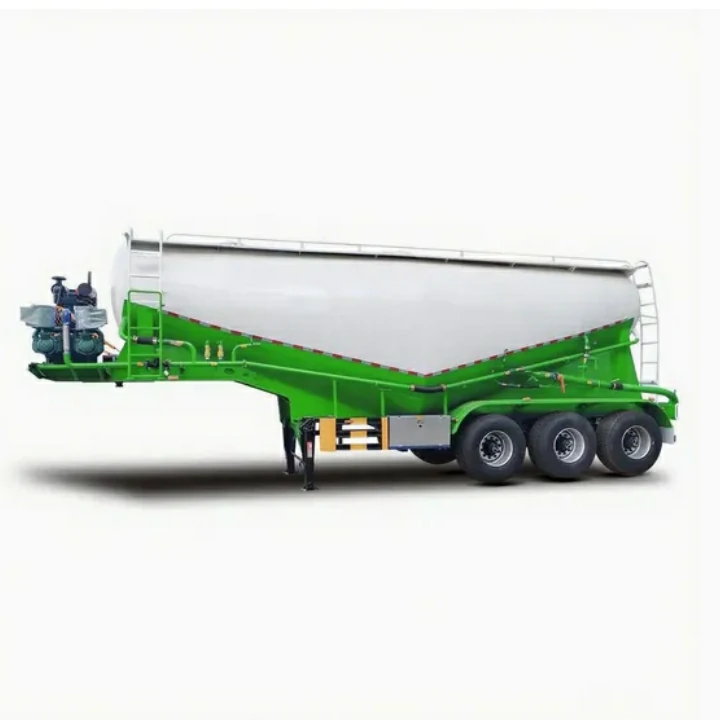
Consider a practical field scenario within a major regional development zone near Takoradi or a busy construction site in central Accra. If a logistics firm attempts to haul massive volumes of powdered material using traditional bulk bags or poorly sealed equipment, the damp coastal humidity can rapidly spoil the load, resulting in severe material loss. However, an optimized dry bulk cement tanker trailer Ghana fleet setup isolates the reactive cargo entirely from atmospheric moisture. The high-capacity pneumatic fluidization system pumps the cargo into storage silos in a fraction of the time required for manual unloading, ensuring zero environmental contamination and keeping tight infrastructure schedules fully on track.
The Evolving State of Bulk Cement Logistics Across West African Networks
The ongoing construction boom in Ghana has placed unprecedented pressure on traditional bulk supply chains. Historically, the transport of cement in individual bags was the industry standard, but as national infrastructure projects scale up in magnitude and complexity, this method has become a significant operational bottleneck. Handling thousands of tons of cement daily requires a highly automated, bulk-volume approach. The transition toward automated bulk distribution is no longer just an optional strategy for ambitious firms; it is a fundamental requirement for remaining competitive in international bidding.
Bulk transport completely transforms the logistics landscape by eliminating the labor-intensive processes associated with loading, unloading, and protecting individual packages. When operating specialized pneumatic transport assets, the time saved during discharging significantly increases the number of fleet trips a vehicle can complete within a weekly cycle. This operational efficiency is vital for meeting the tight deadlines associated with government road construction, hydro-electric schemes, and large-scale commercial developments. Furthermore, removing manual lifting requirements lowers workplace injury risks, creating a safer and much more predictable operational environment for fleet managers.
Engineering Specifications Tailored for Severe Topographical and Climatic Demands
Designing a heavy-duty trailer for the Ghanaian transport market requires a deep technical understanding of local operating environments. The local climate is characterized by intense tropical heat and dramatic seasonal shifts in humidity, both of which can severely compromise the flowability of fine powdered materials. A highly effective bulk tanker must feature premium-grade structural steel or aluminum alloy hulls that exhibit exceptional resistance to structural fatigue and chemical corrosion. The absolute integrity of every single structural tank weld is paramount, as the intense mechanical vibration experienced on unpaved or developing roads can easily induce micro-fractures in lower-quality alternatives.
The pneumatic discharge array serves as the true mechanical core of any high-volume bulk cement tank semi trailer operating in remote regions. Because the electrical supply grid at far-flung project sites can occasionally experience instability, integrating a highly reliable, independent diesel-driven air compressor system directly onto the trailer chassis is a critical design advantage. This independent power setup allows logistics crews to execute discharge operations anywhere, completely independent of local infrastructure limits. Advanced tankers also feature optimized internal fluidization beds and multi-way aeration fabrics. This engineering focus prevents dense cement powders from packing tightly or clumping along the bottom of the hopper, ensuring a rapid, continuous discharge stream from the first ton to the last.
Comparative Performance Metrics of Industrial Cement Transport Methods
The economic justification for modernizing an industrial transport fleet with specialized pneumatic machinery is backed by clear operational data. When analyzing the total cost per ton moved, the long-term efficiency of specialized bulk transport far exceeds that of traditional bagged logistics. The following data highlights the distinct operational performance metrics that industrial decision-makers in West Africa must evaluate when planning long-term infrastructure support.
| Transport Methodology | Typical Loading Speed | Environmental Contamination Risk | On-Site Manual Labor Requirement | Comparative Cost Per Ton |
| Bagged Cargo Flatbeds | Low (Manual Loading) | High Exposure to Rain & Dust | Heavy Human Resource Demand | High Operational Cost |
| Pneumatic Bulk Tankers | Rapid (Gravity Chute) | Sealed and Completely Protected | Minimal Operator Supervision | Low Consolidated Cost |
Table 1: Operational Comparison of Cement Transport Configurations within the Ghanaian Logistics Sector.
As detailed in the performance matrix, bulk tankers provide a massive advantage in human resource optimization and per-ton transportation economics. The minimal on-site labor requirement allows infrastructure companies to streamline their field workforces and focus key personnel on core structural engineering tasks. Furthermore, the tightly sealed nature of the pneumatic tank completely eliminates the contamination risks associated with exposure to heavy tropical rain, unexpected moisture ingress, or ambient dust during long-distance transit, ensuring that the raw material delivered to the mixing batching plant meets exact laboratory strength specifications.
Diversification and Specialized Liquid Chemical Transport Requirements
While the movement of dry bulk cement remains a primary driver for many regional infrastructure projects, successful logistics companies in competitive markets know that strategic fleet diversification is the real secret to maintaining year-round profitability. Once a transport provider establishes a rock-solid reputation for reliable dry powder delivery, they can easily leverage that logistical footprint to handle other valuable granular materials, such as industrial lime, fly ash, or powdered manufacturing catalysts. However, a truly resilient transport portfolio is rarely limited to dry industrial powders alone.
Many large-scale industrial processing plants, gold mining operations, and regional manufacturing hubs also require the consistent transport of aggressive liquid reagents, refined fuels, or hazardous process chemicals. To meet these highly specialized demands safely, forward-thinking logistics firms often integrate a heavy-duty chemical cargo tank trailer into their active fleet mix. Possessing the technical capacity to transport both complex dry bulk materials and specialized industrial liquids allows transport companies to maximize their overall vehicle utilization rates. By keeping a multi-purpose fleet ready for diverse product types, a logistics business can insulate itself against seasonal market slowdowns in any single industrial sector, securing stable revenue streams and building a much more resilient business model.
If your process engineering teams require professional technical advice or a customized quote to optimize your transport fleet for regional challenges, you can contact our application specialists directly for an individual technical evaluation.
Dry Bulk Tanker Maintenance Protocols for High-Humidity Environments
Maintaining high system availability over a multi-year operating lifespan requires a strict, proactive maintenance program specifically designed to counter high atmospheric humidity. Technicians must regularly inspect the interior fluidization canvas and aeration piping to prevent moisture from mixing with residual cement dust inside the hopper chambers. If moisture enters the pneumatic system, it can form a hardened layer of concrete over the aeration pads, blocking airflow, increasing unloading times, and placing unnecessary strain on the diesel-driven air compressor.
Fleet mechanics should also pay close attention to the structural condition of the running gear and suspension brackets. Heavy-duty transport across changing terrain requires high-strength multi-leaf or advanced air suspension systems paired with certified heavy-vehicle axles to evenly distribute massive payloads. Ensuring that the manual discharge valves, pressure relief gauges, and primary seal gaskets undergo regular cleaning and sealing checks prevents unexpected pressure drops during discharge cycles, keeping fuel consumption low and ensuring the fleet operates safely at maximum capacity.
Ghana Bulk Cement Logistics FAQ
What is the mechanical difference between a V-type and a W-type bulk tanker design?
A V-type bulk tanker features a single, streamlined hopper layout with a lower center of gravity, making it highly stable on winding roads and easier to clean out completely. A W-type configuration uses a dual-hopper layout to maximize total tank capacity relative to the trailer’s overall length, making it ideal for hauling higher volumes of lower-density powders over long highway routes.
How do operators prevent the internal cement powder from clumping during long trips?
Clumping is prevented by using premium, moisture-resistant aeration fabric inside the tank hoppers. Before discharge begins, the independent diesel compressor forces dry compressed air through this specialized fabric, fluidizing the settled powder into a highly mobile, liquid-like state that flows smoothly through the discharge pipeline without blocking the valves.
Can a dry bulk tanker be safely transitioned from hauling cement to hauling fly ash?
Yes, these pneumatic trailers are highly versatile and can easily transport fly ash, lime, or gypsum. However, to prevent cross-contamination that could ruin a concrete mix, the interior of the tank, the fluidization pads, and the entire discharge hose line must be thoroughly cleaned and dried out before switching material types.
What causes a sudden drop in the discharge speed during an on-site silo delivery?
A sudden drop in discharge speed is usually caused by either a clogged air intake filter on the compressor, a leaking main tank gasket, or an unvented storage silo creating high backpressure. Regular maintenance of the air filtration system and proper training on monitoring pressure gauges will resolve these operational bottlenecks quickly.
Partnering with Fuyuan for Premium Industrial Logistics Solutions
As a leading global provider of high-reliability transport infrastructure and specialized heavy-vehicle manufacturing, Fuyuan delivers robust mobile logistics solutions tailored for demanding industrial and construction applications. We engineer and manufacture premium-grade transport systems, advanced pneumatic tankers, and heavy-duty semi-trailers engineered to withstand severe operational environments while maintaining optimal safety and efficiency. By focusing on precision engineering, strict manufacturing quality control, and adherence to international design standards, our vehicles provide global logistics teams with reliable performance and straightforward maintainability. Beyond supplying world-class hardware, our technical team is dedicated to supporting your engineering staff with exhaustive documentation, product alignment insight, and structural design support to ensure your transport operation achieves unmatched fleet uptime and safety compliance.
References
- International Cement Review and Global Logistics Analyses: CemNet Industry Portal
- Global Cement Technical Infrastructure and Bulk Materials Handling Guides: Global Cement News
- International Organization for Standardization Tanker Construction and Safety Frameworks: ISO Standards Authority



