


What Determines Car Carrier Trailer Price and How Can Buyers Optimize Their Investment?
April 1, 2026
The answer to “what determines car carrier trailer price” lies in a combination of engineering complexity, material selection, configuration options, and supplier capabilities. A car carrier trailer is not a standardized commodity; it is a highly specialized transport solution designed to safely move multiple vehicles under varying logistical conditions. As a result, prices can vary significantly depending on load capacity, structural design, hydraulic systems, compliance requirements, and customization levels. For fleet operators and logistics companies, understanding these factors is essential to making a cost-effective and performance-driven investment.
Core Factors That Influence Car Carrier Trailer Price
Pricing in the trailer industry behaves less like a fixed tag and more like a dynamic equation. Each specification adjustment nudges the final cost up or down.
Structural Design and Load Capacity
The number of vehicles a trailer can carry is one of the most influential cost drivers. Single-deck carriers are simpler and more affordable, while double-deck or hydraulic lifting systems significantly increase complexity and price.
A high-capacity car carrier semi trailer designed for 6–10 vehicles requires reinforced steel structures, advanced balancing systems, and precision engineering, all of which contribute to higher costs.
Material Selection and Build Quality
High-strength steel, aluminum alloys, and corrosion-resistant coatings directly impact both durability and price. Premium materials increase upfront costs but reduce long-term maintenance and extend service life.
Hydraulic and Mechanical Systems
Modern car carriers often include hydraulic lifting decks for efficient loading and unloading. These systems add convenience and operational efficiency but also increase manufacturing complexity and cost.
Compliance and Certification
Export markets often require adherence to regional regulations such as EU standards or DOT compliance. Meeting these standards involves additional design considerations, testing, and documentation.
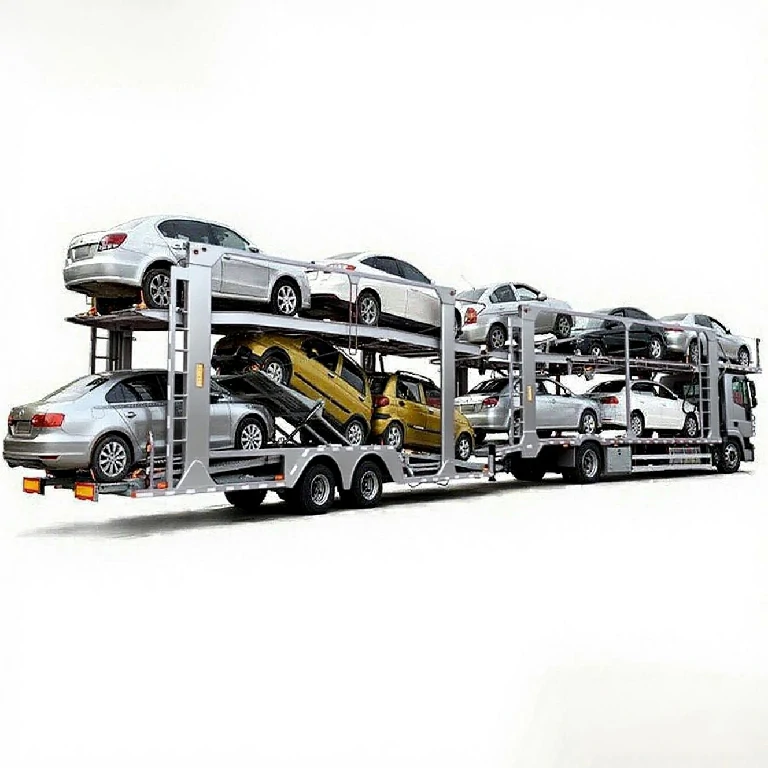
Types of Car Carrier Trailers and Their Price Ranges
Different trailer configurations serve different operational needs, and each comes with its own pricing structure.
Single-Deck Car Carriers
These are typically used for short-distance or low-volume transport. They are the most economical option but offer limited capacity.
Double-Deck Car Carriers
Double-deck trailers maximize transport efficiency by carrying more vehicles per trip. They are widely used in commercial vehicle logistics.
Enclosed Car Carriers
Designed for high-value or luxury vehicles, enclosed carriers provide protection from weather and road debris, resulting in higher costs.
Hydraulic Car Carriers
Equipped with lifting systems, these trailers improve loading efficiency and flexibility, especially for mixed vehicle sizes.
Table 1: Typical Car Carrier Trailer Price Ranges by Type
| Trailer Type | Capacity (Vehicles) | Key Features | Estimated Price Range (USD) |
|---|---|---|---|
| Single-Deck | 2–4 | Simple structure | 8,000 – 15,000 |
| Double-Deck | 6–10 | High capacity | 15,000 – 35,000 |
| Enclosed Carrier | 2–6 | Weather protection | 25,000 – 60,000 |
| Hydraulic Carrier | 6–10 | Lift systems, flexible loading | 30,000 – 70,000 |
Caption: Estimated price ranges for different types of car carrier trailers based on configuration and features.
Contact our team to get a customized quote tailored to your fleet requirements.
How Customization Impacts Pricing
Customization is where pricing becomes highly variable, as each modification introduces new engineering and manufacturing considerations.
Dimension and Configuration Adjustments
Buyers may require specific trailer lengths, axle configurations, or loading angles to suit regional regulations or operational needs.
Branding and Appearance
Custom paint, logos, and surface treatments enhance brand visibility but add to production costs.
Optional Features
Additional features such as anti-slip platforms, advanced braking systems, and telematics integration can significantly influence the final price.
Modular Design Options
Some manufacturers offer modular designs that allow future upgrades, providing long-term value despite a higher initial investment.
Total Cost of Ownership Beyond Purchase Price
Focusing solely on purchase price can be misleading. Smart buyers evaluate total cost of ownership (TCO), which includes operational and lifecycle expenses.
Maintenance and Durability
Higher-quality trailers often require less maintenance, reducing downtime and repair costs over time.
Fuel Efficiency
Lightweight materials and aerodynamic designs can improve fuel efficiency, especially in long-haul operations.
Resale Value
Well-built trailers from reputable suppliers maintain higher resale value, offsetting initial investment costs.
Operational Efficiency
Trailers with advanced loading systems reduce labor time and increase turnaround speed, improving overall profitability.
Choosing the Right Manufacturer for Value Optimization
Selecting the right supplier is as critical as choosing the right trailer specification.
Experience and Technical Expertise
Established truck trailer manufacturers bring proven engineering capabilities and industry knowledge, ensuring reliable product performance.
Production Capacity and Quality Control
Manufacturers with advanced facilities and strict quality control systems deliver consistent products that meet international standards.
After-Sales Support
Reliable after-sales service, spare parts availability, and technical support are essential for minimizing operational disruptions.
Market Reputation
Evaluating established semi trailer brands helps buyers identify trusted partners with a track record of performance and reliability.
Market Trends Affecting Car Carrier Trailer Price
The pricing landscape is influenced by broader industry trends and economic factors.
Raw Material Costs
Fluctuations in steel and aluminum prices directly impact manufacturing costs.
Technological Advancements
Automation, lightweight materials, and smart systems are increasing initial costs but improving long-term efficiency.
Global Logistics Demand
Rising demand for vehicle transportation is driving innovation and competition, affecting pricing dynamics.
Regulatory Changes
Stricter safety and environmental regulations may increase compliance costs but enhance overall product quality.
FAQ: Car Carrier Trailer Price
What is the average car carrier trailer price?
Prices typically range from $8,000 to $70,000 depending on type, capacity, and features.
Why do hydraulic car carriers cost more?
They include advanced lifting systems that improve efficiency but require more complex engineering and components.
Is customization worth the additional cost?
Yes, customization ensures the trailer meets specific operational needs, often improving efficiency and long-term ROI.
How can I reduce total ownership costs?
Invest in high-quality materials, choose reliable manufacturers, and consider fuel efficiency and maintenance requirements.
What should I prioritize when buying a car carrier trailer?
Focus on load capacity, durability, compliance, and supplier reliability rather than just initial price.
About Fuyuan
Fuyuan is a professional semi trailer manufacturer dedicated to delivering high-performance transport solutions for global logistics operators. With advanced manufacturing facilities, strict quality control systems, and a strong commitment to innovation, Fuyuan provides durable, customizable trailers designed to meet diverse industry requirements. From standard models to specialized configurations, Fuyuan supports customers in optimizing efficiency, safety, and long-term value.
References



