


Are You Choosing the Right Semi Truck Flatbed Trailer Dimensions for Your Cargo Strategy?
March 27, 2026
Semi truck flatbed trailer dimensions are not a one-size-fits-all decision, and choosing the right configuration can directly influence your cost per mile, loading efficiency, and compliance risk. In short, the “right” dimensions depend on what you haul, where you operate, and how frequently your cargo profile changes. While standard flatbeds typically range from 48 to 53 feet in length with an 8.5-foot width, businesses that handle containers, heavy machinery, or short-haul dense cargo often benefit more from specialized formats such as 20 ft, 40 ft, or 45 ft flatbeds. The key is not just capacity, but dimensional alignment with real-world logistics scenarios.
This guide breaks down how decision-makers can evaluate semi truck flatbed trailer dimensions from a strategic and operational perspective, with practical examples and technical considerations.
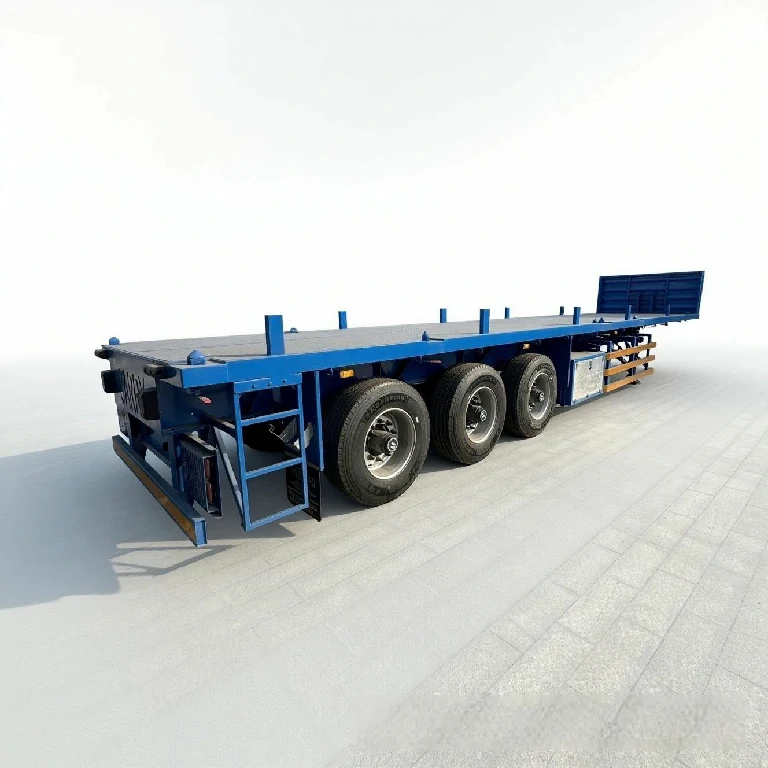
How Semi Truck Flatbed Trailer Dimensions Influence Transport Economics
Flatbed trailers operate like open architecture in motion. Without walls to constrain cargo, dimensions become both an opportunity and a liability.
A longer trailer increases volume potential, but only if your cargo actually utilizes that space. For instance, transporting compact steel components on a 53-foot trailer often results in unused deck length, effectively lowering load efficiency. On the other hand, oversized construction beams may require extended length to avoid overhang penalties.
Width also plays a decisive role. At 8.5 feet, standard flatbeds align with regulatory limits, but cargo exceeding this width triggers permit requirements, escort vehicles, and higher operational costs. Therefore, understanding dimensional thresholds is essential for cost control.
Height is equally critical. Since flatbeds lack a roof, cargo height is constrained by overall road limits rather than trailer structure. This flexibility allows transport of tall equipment, but it also demands careful route planning to avoid clearance issues.
Standard vs. Application-Specific Flatbed Dimensions
While industry standards provide a baseline, real efficiency comes from matching trailer dimensions to application scenarios.
General-Purpose Flatbed Dimensions
| Parameter | Standard Range |
|---|---|
| Length | 48–53 feet |
| Width | 8.5 feet |
| Deck Height | 4.5–5 feet |
| Load Capacity | Up to 52,000 lbs |
Table 1: Baseline semi truck flatbed trailer dimensions for general freight
These configurations are widely used in North America due to their compatibility with highway regulations and versatility across industries.
Scenario-Based Dimension Selection
Short-distance hauling of dense materials such as steel plates or concrete blocks often favors compact trailers. A 20 ft flatbed semi trailer offers higher maneuverability and better weight distribution for urban or confined job sites.
For containerized logistics, a 40 ft flatbed semi trailer aligns perfectly with ISO container standards, eliminating wasted space and simplifying securing processes.
Longer cargo such as pipes, wind turbine components, or prefabricated structures may require a 45 foot flatbed semi trailer to balance load distribution and minimize overhang risks.
Matching Trailer Dimensions to Cargo Profiles
Selecting the right flatbed is less about the trailer itself and more about the cargo ecosystem it serves.
Dense vs. Voluminous Cargo
Dense cargo reaches weight limits before filling available space. In such cases, shorter trailers often deliver better efficiency because they reduce unnecessary deck length while maintaining legal weight compliance.
Voluminous cargo, such as lightweight industrial frames or packaged goods, benefits from longer trailers that maximize cubic utilization.
Irregular and Oversized Loads
Flatbeds are frequently used for cargo that does not conform to standard shapes. Machinery with uneven dimensions, for example, may require additional deck space for proper securing.
In these situations, dimension flexibility becomes a competitive advantage. Adjustable axle positions, extendable decks, and reinforced structures can transform a standard trailer into a specialized transport solution.
Loading and Unloading Considerations
Dimensions also affect how quickly cargo can be handled. A shorter trailer may reduce loading time in tight spaces, while a longer deck allows simultaneous loading from multiple points.
Forklift reach, crane access, and dock compatibility should all be considered when evaluating trailer size.
Regulatory Constraints and Their Impact on Dimensions
Flatbed trailer dimensions are governed by strict transportation regulations, which vary by region but generally follow similar principles.
Key Regulatory Limits
- Maximum width: typically 8.5 feet without permits
- Maximum overall height: around 13.5 to 14 feet (including cargo)
- Length restrictions: depend on tractor-trailer combination rules
Exceeding these limits introduces complexity. Oversized loads require permits, route approvals, and sometimes escort vehicles. This not only increases cost but also reduces scheduling flexibility.
Axle Configuration and Weight Distribution
Dimensions alone do not determine compliance. Axle spacing and load distribution are equally important. A poorly distributed load on a correctly sized trailer can still violate weight regulations.
Working with an experienced semi trailer supplier ensures that both dimensional and structural factors are optimized for compliance and performance. You can explore a full range of solutions through this semi trailer portfolio.
Engineering Trends Shaping Flatbed Trailer Dimensions
Modern flatbed design is evolving beyond static dimensions into adaptive engineering.
Lightweight Structural Design
Advanced materials such as high-strength steel and aluminum alloys reduce trailer weight, allowing higher payload capacity within the same dimensional footprint.
Extendable Flatbeds
Extendable trailers provide variable length, enabling operators to transport both standard and oversized cargo without maintaining multiple trailer types.
Integrated Securing Systems
Dimension optimization now includes built-in securing mechanisms such as adjustable anchor points and sliding winches, improving safety and reducing handling time.
These innovations redefine how businesses evaluate semi truck flatbed trailer dimensions, shifting the focus from fixed measurements to operational adaptability.
Get expert guidance on selecting the right flatbed trailer for your operations
Comparing Flatbed Dimensions Across Common Configurations
To better understand how different trailer sizes perform, the following comparison highlights their typical use cases:
| Trailer Type | Best Use Case | Key Advantage |
|---|---|---|
| 20 ft Flatbed | Dense, short-haul cargo | High maneuverability |
| 40 ft Flatbed | Container transport | Standardized compatibility |
| 45 ft Flatbed | Long or oversized cargo | Improved load distribution |
| 48–53 ft Flatbed | General freight | Maximum versatility |
Table 2: Comparison of flatbed trailer configurations by application
Each configuration serves a distinct operational purpose, and selecting the right one can significantly improve logistics efficiency.
FAQ: Semi Truck Flatbed Trailer Dimensions
What is the most common flatbed trailer length?
The most widely used lengths are 48 and 53 feet, particularly in North America, due to their balance of capacity and regulatory compliance.
When should I choose a shorter flatbed trailer?
Shorter trailers are ideal for dense cargo, urban delivery routes, and operations requiring high maneuverability.
Can flatbed trailer dimensions be customized?
Yes, many manufacturers offer tailored solutions to match specific cargo requirements, including custom lengths, reinforced decks, and specialized axle configurations.
How do dimensions affect transportation costs?
Improperly matched dimensions can lead to underutilized space, additional trips, or regulatory penalties, all of which increase overall costs.
Are longer trailers always better?
Not necessarily. While they offer more space, they may reduce efficiency if cargo does not fully utilize the available length.
About Fuyuan
Fuyuan is a specialized manufacturer focused on delivering high-performance flatbed trailer solutions for global logistics operations. With deep expertise in engineering and production, Fuyuan designs trailers that align with real-world transport demands, from compact urban deliveries to heavy-duty industrial hauling. By combining precision manufacturing with flexible customization, Fuyuan helps clients optimize semi truck flatbed trailer dimensions for maximum efficiency, safety, and long-term operational value.
Reference



