



How to Load a Flatbed Semi Trailer Safely and Efficiently for Maximum Compliance and Profitability?
February 18, 2026
How to load a flatbed semi trailer? The correct process involves evaluating cargo weight and dimensions, distributing load evenly across axles, securing freight using compliant tie down methods, and verifying height and weight regulations before dispatch. For logistics managers and operations directors, loading is not just a warehouse task. It is a compliance requirement, a risk management function, and a profitability factor that directly affects equipment lifespan and delivery performance.
Improper loading leads to axle overload violations, cargo shifts, damaged freight, and increased liability exposure. A structured loading methodology ensures that each shipment moves legally, safely, and cost effectively.
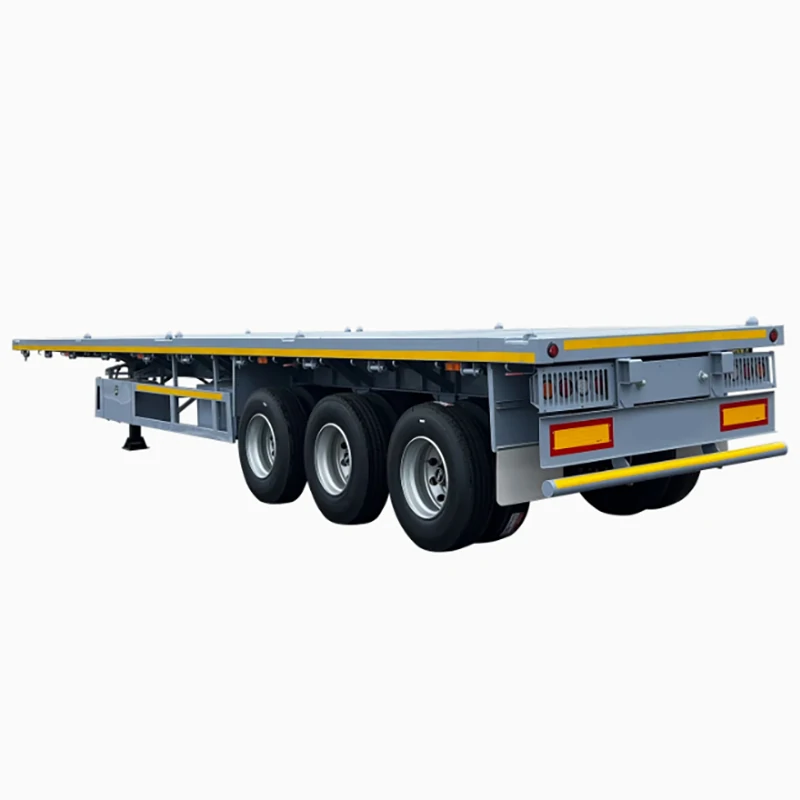
Step 1: Pre Loading Assessment and Equipment Preparation
Before cargo is placed on the deck, operators must evaluate three core variables: weight, dimensions, and center of gravity.
Verify Cargo Specifications
Obtain confirmed documentation for:
- Total cargo weight
- Individual piece weight
- Length, width, and height
- Special handling requirements
Understanding these parameters allows planners to determine whether a standard or reinforced platform is required. Companies using a semi truck flatbed trailer should match cargo characteristics to trailer load rating and structural design.
Inspect the Trailer
A pre loading inspection should include:
- Deck condition and structural integrity
- Tie down points and anchor rails
- Brake system and suspension check
- Tire pressure and axle condition
Identifying issues before loading prevents mid route complications and ensures compliance with commercial vehicle safety regulations.
Step 2: Proper Weight Distribution Across Axles
Correct weight distribution is central to safe flatbed operations.
Understand Axle Load Limits
In the United States, federal gross vehicle weight for interstate operation is generally limited to 80,000 pounds without special permits. Axle weight limits also apply and vary by configuration.
Evenly distributing weight helps prevent:
- Tandem axle overload
- Steering axle imbalance
- Bridge formula violations
Improper weight concentration can trigger fines and mechanical stress.
Position Cargo Strategically
Heavy cargo should be centered between tandem axles while maintaining appropriate kingpin weight for tractor stability. The objective is to balance:
- Front to rear load distribution
- Left to right symmetry
- Axle specific legal limits
For example, steel coils positioned too far forward may overload the tractor drive axles. Machinery positioned too far rearward can reduce steering control.
If your team requires customized loading diagrams aligned with your trailer configuration, consult our engineering support here: Request loading guidance from Fuyuan.
Step 3: Securing Cargo According to Regulatory Standards
Loading does not end once freight is placed on the deck. Securement is equally critical.
Tie Down Requirements
The Federal Motor Carrier Safety Administration outlines cargo securement standards requiring sufficient tie downs based on cargo weight and length. Proper securement prevents shifting during acceleration, braking, and cornering.
Common securement tools include:
- Chains and binders
- Ratchet straps
- Edge protectors
- Coil racks and cradles
- Dunnage and blocking
Tie down quantity must meet minimum working load limit calculations. Failure to comply increases accident risk and regulatory penalties.
Protect Against Movement and Vibration
Use friction mats, blocking materials, and edge protection to reduce movement and prevent structural damage to cargo. Machinery and steel components often require specialized supports to stabilize center of gravity.
Organizations reviewing a flatbed semi trailer for sale should evaluate anchor point strength and deck durability to ensure securement reliability under heavy load conditions.
Step 4: Confirm Height, Width, and Clearance Compliance
After loading and securing cargo, verify dimensional compliance before dispatch.
Measure Overall Height
Total height equals deck height plus cargo height. In most U.S. states, 13 feet 6 inches is the common maximum legal height without oversize permits.
Check Width and Overhang
Standard maximum width is typically 8 feet 6 inches. Rear overhang allowances vary depending on jurisdiction.
Dimensional non compliance may require:
- Oversize permits
- Escort vehicles
- Route surveys
- Restricted travel hours
Early verification prevents delivery delays and unexpected administrative costs.
Step 5: Post Loading Inspection and Documentation
A final inspection ensures load integrity before departure.
Conduct Walk Around Inspection
Drivers should confirm:
- Tightened binders and secure straps
- Even load alignment
- Clearance from tires and suspension components
- No loose materials
Documentation should include weight tickets and securement verification logs.
Companies operating multiple configurations of semi truck trailer platforms should standardize inspection procedures across fleets to minimize compliance variability.
Common Loading Configurations and Best Practices
Table 1 summarizes recommended loading approaches for common cargo types.
Table 1. Flatbed Loading Best Practice by Cargo Type
| Cargo Type | Positioning Strategy | Securement Method | Key Consideration |
|---|---|---|---|
| Steel Coils | Centered between axles | Chains, coil racks | Prevent rolling movement |
| Lumber Bundles | Evenly spaced along deck | Straps with edge protectors | Maintain lateral balance |
| Machinery | Low center placement | Chains, blocking | Stabilize high center of gravity |
| Construction Equipment | Balanced axle load | Chains, wheel chocks | Secure wheels and pivot points |
| Prefabricated Structures | Symmetrical alignment | Straps and blocking | Verify height compliance |
Loading strategy should align with freight type, route terrain, and regulatory requirements.
Risk Management and Liability Considerations
Improper loading significantly increases liability exposure. Cargo shifts can result in:
- Vehicle rollover
- Roadway obstruction
- Infrastructure damage
- Third party injury
Insurance claims and reputational risk often exceed the direct cost of fines. Establishing formal loading protocols and training programs reduces operational risk and protects long term fleet value.
Decision makers should integrate loading procedures into broader safety management systems to ensure regulatory adherence and operational consistency.
Frequently Asked Questions
What is the first step when loading a flatbed trailer?
The first step is verifying cargo weight and dimensions, followed by inspecting the trailer for structural readiness.
How should weight be distributed on a flatbed trailer?
Weight should be centered between axles, balanced front to rear and side to side, and compliant with axle load limits.
What securement equipment is required?
Securement tools depend on cargo type but commonly include chains, binders, ratchet straps, blocking materials, and edge protectors.
How many tie downs are required?
Tie down requirements are based on cargo weight and length according to FMCSA cargo securement standards.
Why is post loading inspection important?
A final inspection ensures securement integrity and compliance before entering public roadways.
About Fuyuan
Fuyuan is a professional semi trailer manufacturer delivering engineered transport solutions for logistics, construction, and heavy industry sectors. Our flatbed platforms are designed with reinforced structural frames, optimized anchor points, and durable decking materials to support safe and compliant cargo loading.
With advanced fabrication systems and strict quality control protocols, Fuyuan provides trailers that align with regulatory requirements and long term operational efficiency. From standard configurations to customized heavy duty solutions, we support fleet managers seeking reliable equipment built for demanding applications.
Reference
Federal Motor Carrier Safety Administration. Cargo Securement Rules.
https://www.fmcsa.dot.gov/regulations/cargo-securement
Federal Highway Administration. Size and Weight Regulations.
https://ops.fhwa.dot.gov/freight/publications/brdg_frmwrk/sect2.htm
Wikipedia. Vehicle Size and Weight Regulations.
https://en.wikipedia.org/wiki/Vehicle_size_and_weight