


Explicación de las dimensiones de los semirremolques planos: Cómo afectan las especificaciones de tamaño a la carga útil, la conformidad y la eficiencia del transporte
25 de diciembre de 2025
A la hora de contratar equipos de cama plana, las dimensiones suelen considerarse números fijos extraídos de una hoja de especificaciones. En realidad, dimensiones del semirremolque plano son variables estratégicas que influyen directamente en la eficacia de la carga útil, el cumplimiento de las rutas, los métodos de carga y los costes de explotación a largo plazo.
Para los operadores de flotas, las empresas de logística, los distribuidores y los compradores de proyectos, elegir las dimensiones adecuadas no consiste simplemente en cumplir unos requisitos mínimos. Pequeñas diferencias en la longitud, anchura o altura de la plataforma pueden determinar si un remolque rinde de forma eficiente en múltiples aplicaciones o se limita a casos de uso limitados.
Este artículo explica las dimensiones de los semirremolques de plataforma desde una perspectiva práctica B2B. Cubre los rangos dimensionales estándar, cómo interactúan las diferentes medidas y cómo los compradores profesionales evalúan las dimensiones cuando se abastecen de remolques para los mercados nacionales e internacionales.
Qué incluyen las dimensiones de los semirremolques planos y por qué son importantes
Las dimensiones de los semirremolques de plataforma suelen referirse a una combinación de medidas clave, como la longitud total, la anchura y la altura de la plataforma y, en ocasiones, el voladizo trasero y la distancia entre ejes. Cada uno de estos parámetros afecta al rendimiento de una manera diferente.
La longitud total determina la capacidad de carga y la compatibilidad con los tamaños de carga estándar. La anchura de la cubierta define qué tipos de carga pueden transportarse sin permisos especiales. La altura de la cubierta afecta a la eficiencia de la carga, la estabilidad y los límites legales de altura.
Desde un punto de vista operativo, las dimensiones influyen en la facilidad con que un remolque se integra en los flujos de trabajo existentes. Un remolque que se adapte a las alturas comunes de los muelles de carga, los tamaños de los contenedores y las dimensiones de la carga reduce el tiempo de manipulación y minimiza la fricción operativa.
Desde el punto de vista de la conformidad, las dimensiones de los remolques deben ajustarse a las normativas viarias regionales. Una configuración que funciona bien en un país puede tener restricciones en otro, especialmente en la logística transfronteriza.
Para los compradores B2B, comprender cómo interactúan estas dimensiones es esencial para evitar costosas reconfiguraciones o limitaciones operativas tras la entrega.
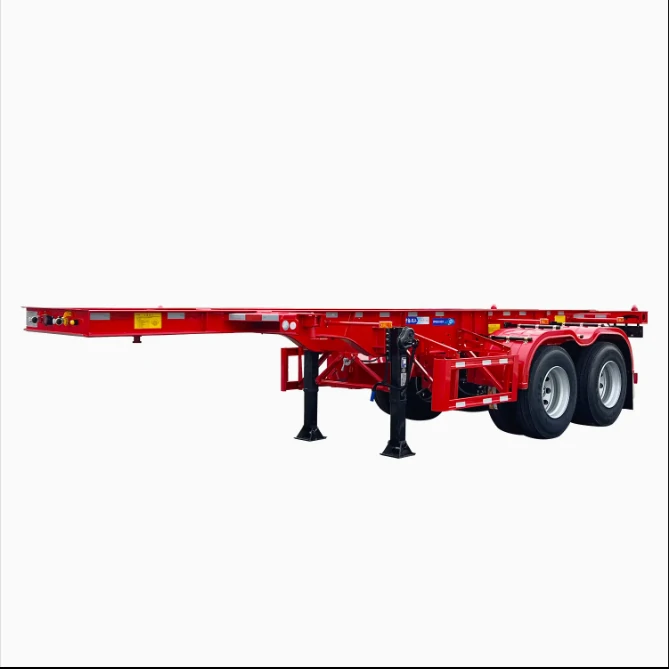
Rangos estándar de longitud y anchura de semirremolques de plataforma plana
Aunque los semirremolques de plataforma pueden personalizarse, la mayoría de los modelos estándar siguen gamas dimensionales ampliamente aceptadas para garantizar la compatibilidad con la infraestructura viaria y las normas de carga.
Longitud
Las longitudes habituales de los semirremolques de plataforma suelen oscilar entre:
- 40 pies (aproximadamente 12,2 m)
- 45 pies (aproximadamente 13,7 m)
- 48 pies (aproximadamente 14,6 m)
- 53 pies (aproximadamente 16,2 m)
Los remolques más cortos suelen utilizarse para el transporte regional o de carga especializada, mientras que los remolques más largos maximizan la capacidad de carga útil en operaciones de larga distancia.
Anchura
La anchura estándar de la cubierta suele ser de 2,48 m a 2,55 mEsta anchura se ajusta a los límites legales de anchura de las carreteras en la mayoría de las regiones. Esta anchura permite transportar carga paletizada, maquinaria y contenedores sin necesidad de permisos de sobredimensionamiento.
Cuando los compradores comparan semirremolque plano configuraciones, la longitud y la anchura suelen evaluarse conjuntamente. Una combinación equilibrada garantiza el máximo espacio útil en cubierta, al tiempo que mantiene la conformidad y la maniobrabilidad. La revisión de múltiples diseños estructurales ayuda a los compradores a comprender cómo afectan las opciones dimensionales a la eficiencia del transporte en el mundo real.
Aquí puede explorar los diseños y tamaños de plataforma más comunes:
semirremolque plano
La altura de la cubierta como dimensión crítica en el diseño general del remolque
Mientras que la longitud y la anchura se discuten a menudo en primer lugar, la altura de la cubierta es una de las dimensiones más influyentes del semirremolque de plataforma.
La altura de la plataforma determina la altura a la que se sitúa la carga sobre la superficie de la carretera, lo que afecta directamente:
- Eficacia de carga y descarga
- Estabilidad del vehículo y centro de gravedad
- Altura máxima de carga permitida por la normativa vial
Las alturas de plataforma más bajas suelen mejorar la estabilidad y simplificar la carga, especialmente para maquinaria pesada o carga industrial. Pueden ser necesarias alturas de plataforma más elevadas para condiciones de carretera difíciles o sistemas de suspensión de alta resistencia.
Dado que la altura de la plataforma interactúa estrechamente con el tipo de suspensión, la configuración del eje y el tamaño de los neumáticos, nunca debe evaluarse de forma aislada. Los compradores que deseen una comprensión técnica más profunda de cómo la altura de la cubierta influye en la seguridad y la eficiencia a menudo revisan las explicaciones detalladas de ingeniería, como esta referencia en dimensiones del semirremolque plano para apoyar decisiones de compra más informadas.
Cómo afectan las dimensiones de los semirremolques planos a los distintos tipos de carga
Las distintas categorías de carga plantean exigencias muy diferentes en cuanto a las dimensiones de los remolques, lo que hace que la planificación dimensional sea especialmente importante para las flotas que realizan diversas tareas de transporte.
En los proyectos de construcción e infraestructuras, los remolques de plataforma suelen transportar equipos como excavadoras, cargadoras y componentes prefabricados. En estos casos, la longitud y la altura de la plataforma deben trabajar conjuntamente para garantizar ángulos de carga seguros y un transporte estable.
En el transporte de acero y materiales industriales, la anchura y la resistencia de la cubierta son fundamentales. La carga, como bobinas o planchas de acero, requiere una anchura de cubierta suficiente para una distribución adecuada de la carga y puntos de amarre seguros.
La carga sobredimensionada o de altura excesiva introduce limitaciones adicionales. Incluso pequeños aumentos en la altura de la cubierta o en la longitud total pueden dar lugar a requisitos de permisos o restricciones de ruta, lo que aumenta los costes administrativos y operativos.
Desde el punto de vista de la rentabilidad, unas dimensiones bien optimizadas reducen el espacio vacío innecesario, mejoran la utilización de la carga útil y reducen el consumo de combustible en largas distancias. Para las flotas de alto kilometraje, estas ganancias incrementales se acumulan en ahorros cuantificables.
Conformidad dimensional en el transporte internacional y transfronterizo
Para los exportadores y los operadores logísticos internacionales, las dimensiones de los semirremolques de plataforma deben ajustarse a múltiples marcos normativos.
La mayoría de las regiones imponen límites a la longitud, anchura y altura total del vehículo. Un remolque que cumple las normas en un país puede tener restricciones en otro, sobre todo cuando se utiliza en zonas fronterizas o urbanas.
Por eso, los compradores experimentados colaboran estrechamente con fabricantes de semirremolques que comprendan las normas internacionales y las variaciones regionales. Evaluar la formación técnica, la capacidad de producción y la experiencia exportadora de fabricantes de semirremolques ayuda a los compradores a garantizar que las especificaciones dimensionales sean prácticas, conformes y sostenibles a lo largo de la vida útil del remolque.
Una planificación dimensional adecuada en la fase de aprovisionamiento reduce el riesgo de problemas normativos, limitaciones de ruta y costes de modificación inesperados después de la entrega.
Cómo deben evaluar los compradores B2B las dimensiones de los semirremolques planos
La selección de las dimensiones de semirremolque de plataforma adecuadas comienza con el análisis operativo en lugar de la comparación de catálogos.
En primer lugar, los compradores deben definir sus perfiles de carga principales, incluidos el peso, el tamaño y el método de carga. De este modo se establece una línea de base dimensional realista.
A continuación, deben tenerse en cuenta las condiciones de las rutas y los entornos normativos. El transporte de larga distancia por carretera favorece las plataformas más largas y las alturas más bajas en aras de la eficiencia, mientras que las rutas mixtas o todoterreno pueden requerir compromisos.
La flexibilidad futura también es importante. Las flotas evolucionan, y un remolque con dimensiones que admiten múltiples aplicaciones suele ofrecer mejor valor a largo plazo que uno optimizado para una única tarea.
Por último, las decisiones dimensionales deben discutirse directamente con el equipo de ingeniería del fabricante. Los ajustes de longitud, anchura o altura de la plataforma suelen requerir cambios coordinados en la estructura del bastidor, la suspensión y la colocación de los ejes. Los fabricantes con una gran capacidad de diseño pueden equilibrar estos factores sin sacrificar la seguridad ni la durabilidad.
Por qué Fuyuan es un socio de confianza para soluciones de semirremolque de plataforma plana
Fuyuan se especializa en la fabricación de semirremolques planos diseñados en torno a los requisitos de transporte del mundo real en lugar de especificaciones genéricas. Al centrarse en la optimización dimensional, Fuyuan ayuda a los compradores a lograr un equilibrio entre la eficiencia de la carga útil, el cumplimiento normativo y la fiabilidad operativa a largo plazo.
Con el apoyo de ingenieros experimentados y un sistema de producción estable, Fuyuan ofrece soluciones personalizadas de remolques planos para empresas de logística, distribuidores y compradores de proyectos en todo el mundo. Más allá de las certificaciones estándar, Fuyuan también tiene múltiples patentes, lo que refleja la innovación continua en la estructura del remolque y los procesos de fabricación.
Para los compradores que buscan un socio a largo plazo que entienda cómo las dimensiones de los semirremolques de plataforma afectan al rendimiento en operaciones reales, Fuyuan ofrece soluciones diseñadas para la eficiencia, la seguridad y el crecimiento sostenible de la flota.



