


How Wide Is a Flatbed Semi Trailer and What Does That Mean for Your Cargo Planning?
February 25, 2026
How wide is a flatbed semi trailer? In most standard configurations, a flatbed semi trailer is 8 feet to 8.5 feet wide, which equals approximately 96 to 102 inches (2.44 to 2.60 meters). In the United States, the legal maximum width for standard trailers operating on federal highways is typically 8.5 feet (102 inches), excluding certain safety devices. This dimension is not arbitrary. It directly affects cargo compatibility, route planning, regulatory compliance, and overall transportation efficiency.
For logistics managers, fleet operators, construction contractors, and freight forwarders, understanding trailer width is not just a technical curiosity. It determines whether cargo can move legally without permits, whether escorts are required, how loads must be secured, and whether a project timeline remains intact. In this article, we will explore the practical implications behind the question how wide is a flatbed semi trailer and provide technical insights to support informed purchasing and operational decisions.
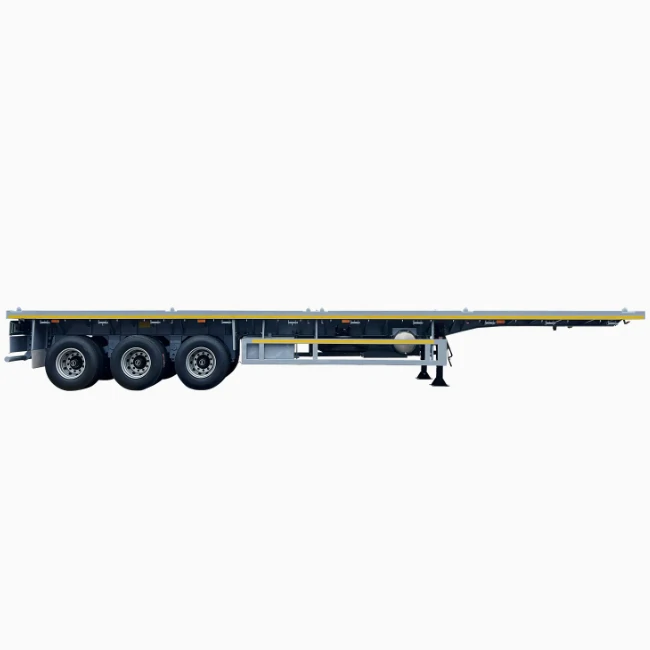
What Is the Standard Width of a Flatbed Semi Trailer?
The most common answer to how wide is a flatbed semi trailer is 8.5 feet or 102 inches. This dimension has become the industry benchmark because it aligns with transportation regulations in major markets including North America and many international regions.
Regulatory Framework
In the United States, federal size regulations for commercial vehicles are governed by the Federal Highway Administration under the U.S. Department of Transportation. According to guidelines referenced in Federal Highway Administration documentation, the maximum allowable trailer width on the National Network is generally 102 inches, excluding mirrors and certain safety equipment.
This regulatory ceiling shapes manufacturing standards worldwide. Even in export markets, 102-inch-wide trailers are frequently specified because they provide optimal compatibility with global logistics systems.
Metric Conversions and International Standards
For international buyers, 102 inches converts to approximately 2,590 millimeters. In some regions, standard width may be limited to 2,500 millimeters. Therefore, when evaluating export orders, precise dimensional clarification is essential.
For heavy equipment transport or project cargo, wider deck configurations are possible. However, these often require oversize permits and specialized routing.
Why Does Trailer Width Matter for Cargo Compatibility?
Understanding how wide is a flatbed semi trailer is critical when transporting construction materials, machinery, steel structures, containers, or prefabricated modules.
Load Planning Efficiency
A standard 8.5-foot-wide trailer allows for efficient loading of:
• Palletized goods arranged in two standard pallet widths
• Steel coils and beams within legal dimensions
• Construction equipment that fits under 102 inches
• Containerized cargo compatible with ISO standards
The International Organization for Standardization, commonly known as International Organization for Standardization, defines container width standards that integrate smoothly with 102-inch trailer decks. This interoperability improves intermodal efficiency.
Overwidth Cargo Considerations
If cargo exceeds 102 inches in width, it is classified as overwidth in many jurisdictions. This triggers additional requirements such as:
• Special transportation permits
• Escort vehicles
• Restricted travel hours
• Route surveys
These factors increase transportation cost and administrative complexity. Therefore, selecting cargo dimensions that align with standard trailer width simplifies operations.
How Does Width Influence Structural Design?
The question how wide is a flatbed semi trailer is also connected to structural engineering decisions. Wider decks require reinforced cross members, stronger side rails, and carefully calculated load distribution.
Frame Reinforcement
An increase in width without proper structural reinforcement may compromise load stability. Manufacturers compensate by using high-tensile steel, optimized beam spacing, and precision welding techniques.
Load Distribution and Axle Spacing
Width works in conjunction with axle configuration. A wider load footprint can improve lateral stability, but it must be balanced against axle weight distribution regulations.
Table 1. Standard Flatbed Width and Operational Implications
| Width (inches) | Width (mm) | Regulatory Status | Operational Impact |
|---|---|---|---|
| 96 | 2,438 | Legal in most regions | Slightly narrower cargo capacity |
| 100 | 2,540 | Legal in many markets | Balanced efficiency |
| 102 | 2,590 | Maximum standard US width | Optimal cargo compatibility |
| Over 102 | Over 2,590 | Oversize classification | Permit and escort required |
What Are the Differences Between Standard and Extended Width Trailers?
Although 102 inches answers the standard question how wide is a flatbed semi trailer, specialized operations may require extended width designs.
Extendable or Drop-Deck Configurations
Some heavy haul applications use extendable flatbeds or removable gooseneck trailers. While these often focus on length and height flexibility, width customization is also possible.
However, wider platforms introduce higher wind resistance, increased structural weight, and potential compliance challenges.
Industry-Specific Requirements
Industries such as wind energy, modular construction, and industrial equipment manufacturing sometimes require custom width solutions. In these cases, collaboration with an experienced flatbed semi trailer manufacturer ensures compliance and durability.
If you are evaluating a customized trailer solution or require expert dimensional consultation, contact our engineering team today for tailored support: Speak with our specialists.
How Does Width Impact Logistics Costs and ROI?
Width selection influences total cost of ownership beyond initial purchase price.
Permit and Escort Expenses
Operating within the 102-inch standard avoids recurring permit costs. Overwidth transport may require hundreds or thousands of dollars per trip depending on distance and jurisdiction.
Route Flexibility
Standard-width trailers enjoy unrestricted access to most highways, distribution centers, and urban delivery zones. Overwidth loads may face route detours or bridge clearance restrictions.
Fuel Efficiency
Aerodynamic drag increases with wider cargo profiles. Although the difference may seem marginal, cumulative fuel consumption over long-haul routes can significantly affect operating budgets.
For fleet managers reviewing a flatbed semi trailer for sale, verifying deck width alongside payload rating ensures both compliance and financial efficiency.
How Should Buyers Evaluate Width When Ordering a Trailer?
Professional buyers should assess more than nominal deck width. The following technical parameters require verification:
• Overall trailer width including side rails
• Usable deck width between side rails
• Load securing track positioning
• Clearance for tire bulge and suspension movement
• Compatibility with standard cargo dimensions
Engineering Consultation
Collaborating with a reputable semi trailer supplier ensures dimensional tolerances align with regulatory and operational requirements. Engineering drawings, 3D models, and load simulation analysis can help avoid costly post-production modifications.
Future Scalability
Fleet expansion planning should also consider width standardization. Maintaining consistent trailer width across a fleet simplifies driver training, spare parts inventory, and maintenance procedures.
FAQ
What is the legal maximum width of a flatbed semi trailer in the United States?
The standard legal maximum width on federal highways is 102 inches, excluding certain safety equipment.
Are 96-inch-wide trailers still used?
Yes. Some operators prefer 96-inch trailers for specific regional regulations or niche cargo requirements.
Does trailer width affect payload capacity?
Width itself does not directly determine weight capacity, but structural reinforcement required for wider decks may influence overall trailer weight and load distribution.
Can a trailer wider than 102 inches operate without permits?
In most jurisdictions, trailers exceeding 102 inches are classified as oversize and require special permits.
Is 102 inches standard globally?
Many countries align with similar standards, but local regulations vary. Always confirm regional legal limits before procurement.
Conclusion: Width Is a Strategic Dimension
The question how wide is a flatbed semi trailer may appear simple, yet it carries significant operational, regulatory, and financial implications. The industry standard of 8.5 feet or 102 inches offers the optimal balance between cargo flexibility and legal compliance. Choosing the correct width supports route efficiency, minimizes permit requirements, enhances load stability, and maximizes return on investment.
For B2B buyers, width should be evaluated alongside structural integrity, axle configuration, suspension system, and intended cargo type. Strategic dimension planning ensures long-term operational reliability and cost efficiency.
About Yuyuan
Yuyuan is a professional semi trailer supplier dedicated to delivering high-performance transportation solutions for global logistics, construction, and industrial clients. With advanced manufacturing facilities, strict quality control systems, and engineering-driven design processes, Yuyuan provides durable and regulation-compliant flatbed trailers tailored to diverse operational needs. Our commitment to structural integrity, safety compliance, and long-term performance makes us a trusted partner for fleet operators and project logistics providers worldwide.
References
Federal Highway Administration. Vehicle Size and Weight Regulations. https://www.fhwa.dot.gov
International Organization for Standardization. ISO Container Standards Overview. https://www.iso.org



