


How Long Is a Flatbed Semi Trailer and How Do Buyers Choose the Right Length?
February 6, 2026
How long is a flatbed semi trailer? For most commercial transport operations, the short answer is that flatbed semi trailers are commonly available in standardized lengths such as 40 ft, 45 ft, 48 ft, and 53 ft, with custom lengths also widely used for specialized cargo. However, the real decision is not about knowing the number alone. For fleet owners, logistics managers, and project cargo contractors, trailer length directly influences payload flexibility, regulatory compliance, route planning, and long-term operational efficiency.
This article explains standard flatbed trailer lengths, how length affects transport performance, and how professional buyers determine the optimal configuration based on cargo type, regulations, and business strategy.
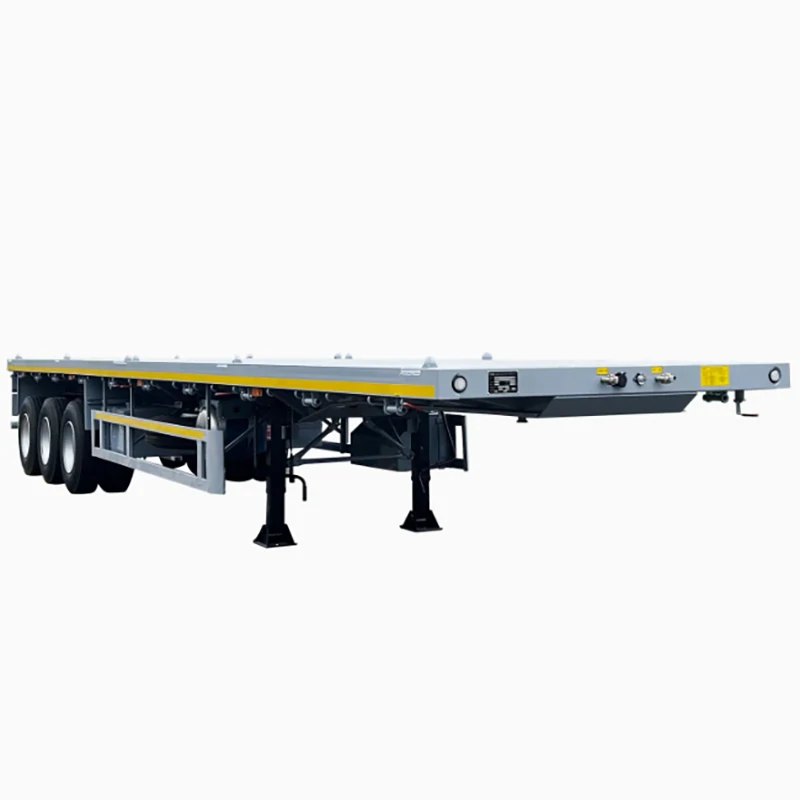
Standard Lengths of Flatbed Semi Trailers in Global Markets
Flatbed semi trailers are designed around internationally recognized length ranges, which allow compatibility with infrastructure, loading equipment, and regulatory frameworks.
In North America, the most widely used flatbed semi trailer lengths are 48 ft and 53 ft. These sizes balance cargo volume with maneuverability and are accepted across interstate highways. In Europe and parts of Asia, 40 ft and 45 ft flatbeds are more common due to stricter road geometry and axle load limits.
From a manufacturing standpoint, a professional semi trailer manufacturer designs flatbed platforms around these standards while allowing structural modifications for regional compliance.
Common Flatbed Semi Trailer Length Categories
Standardization simplifies fleet operations, but length selection should always align with the dominant cargo profile.
Table 1: Typical Flatbed Semi Trailer Lengths and Applications
| Trailer Length | Metric Equivalent | Typical Applications |
|---|---|---|
| 40 ft | ~12.2 m | Containers, machinery, export cargo |
| 45 ft | ~13.7 m | Steel products, building materials |
| 48 ft | ~14.6 m | General freight, construction loads |
| 53 ft | ~16.2 m | Long structural components, bulk freight |
How Flatbed Trailer Length Affects Cargo Capacity and Load Planning
Trailer length determines not only how much cargo can be loaded, but also how efficiently space is utilized. Longer trailers allow linear cargo such as pipes, beams, and prefabricated panels to be transported without segmentation.
However, increased length also introduces load distribution challenges. Axle placement, kingpin position, and frame stiffness must be carefully engineered to prevent uneven stress and excessive wear.
For example, a 53 ft flatbed carrying steel coils requires different load securement strategies compared to a 40 ft trailer transporting machinery crates. Buyers evaluating a flatbed semi trailer for sale should assess whether their cargo benefits from additional length or from tighter load concentration.
Regulatory Considerations When Selecting Flatbed Trailer Length
Trailer length regulations vary by country and, in some cases, by state or province. While many regions allow trailers up to 53 ft on designated routes, others impose stricter limits to protect infrastructure and traffic safety.
Length also interacts with axle load regulations. A longer trailer does not automatically permit higher payloads unless axle spacing and ratings are configured correctly.
Professional buyers often select lengths that minimize the need for special permits while maintaining cargo flexibility. Understanding how trailer length impacts compliance is essential for avoiding fines, delays, and routing restrictions.
Operational Efficiency and Maneuverability Trade-Offs
Longer flatbed semi trailers improve payload efficiency on straight highways but reduce maneuverability in urban environments, ports, and construction sites. Turning radius, backing difficulty, and dock alignment all become more demanding as trailer length increases.
Fleet operators with mixed delivery environments often standardize on 48 ft trailers to balance efficiency and handling. Meanwhile, operators focused on long-haul or project cargo may favor 53 ft platforms for maximum deck utilization.
Modern chassis design and steering axle options help mitigate maneuverability challenges, especially for specialized applications.
Custom Length Flatbed Trailers for Specialized Transport
Not all transport requirements fit standard dimensions. Heavy industry, wind energy, and infrastructure projects often require custom flatbed lengths tailored to oversized cargo.
Custom trailers may extend beyond standard lengths or feature modular deck sections. These configurations demand advanced structural engineering to maintain torsional rigidity and road safety.
Buyers sourcing a configurable flatbed semi truck trailer often prioritize modularity to adapt to evolving project demands.
Midway through the specification process, engaging directly with the manufacturer can prevent costly redesigns and operational mismatches.
Consult our technical team to evaluate the optimal flatbed trailer length for your transport application.
How Flatbed Trailer Length Impacts Transport Cost Over Time
While longer trailers may have higher upfront costs, they can reduce per-unit transport expenses by increasing load efficiency. Conversely, shorter trailers may lower maintenance costs and improve turnaround times in congested environments.
Length selection also affects tire wear, axle stress, and fuel consumption. A poorly matched trailer length can increase total cost of ownership even if initial pricing appears attractive.
For decision-makers, trailer length should be evaluated as a long-term investment rather than a one-time purchase parameter.
Industry Use Cases Based on Flatbed Trailer Length
Different industries gravitate toward different trailer lengths based on cargo characteristics.
Construction companies often use 48 ft flatbeds for versatility across materials. Steel distributors may prefer 53 ft trailers to accommodate long profiles. Export-oriented manufacturers frequently choose 40 ft flatbeds aligned with containerized logistics systems.
Understanding these patterns helps buyers benchmark their decisions against industry best practices.
For a deeper technical discussion on how trailer dimensions influence performance, see this detailed resource on flatbed semi trailer length.
Frequently Asked Questions (FAQ)
How long is a standard flatbed semi trailer?
The most common lengths are 48 ft and 53 ft, though 40 ft and 45 ft models are widely used in international markets.
Can flatbed semi trailers be customized in length?
Yes. Manufacturers can design custom-length flatbeds to meet specific cargo and regulatory requirements.
Does a longer trailer always mean higher payload?
No. Payload depends on axle ratings and legal limits, not length alone.
Are there legal restrictions on flatbed trailer length?
Yes. Maximum allowed length varies by region and route classification.
Which flatbed length is best for general freight?
A 48 ft flatbed is often considered the most versatile option for mixed cargo operations.
About Fuyuan
Fuyuan is a professional semi trailer manufacturer specializing in engineered transport solutions for global logistics, construction, and industrial applications. With a focus on structural reliability, regulatory compliance, and customization, Fuyuan designs flatbed semi trailers in standard and custom lengths to support diverse operational needs. Our engineering-driven approach ensures that every trailer delivers long-term value, safety, and performance.
References
Wikipedia – Flatbed truck
https://en.wikipedia.org/wiki/Flatbed_truck
Wikipedia – Semi-trailer
https://en.wikipedia.org/wiki/Semi-trailer
Federal Highway Administration (FHWA) – Truck Size and Weight Regulations
https://ops.fhwa.dot.gov/freight/policy/rpt_congress/truck_sw_laws/



